
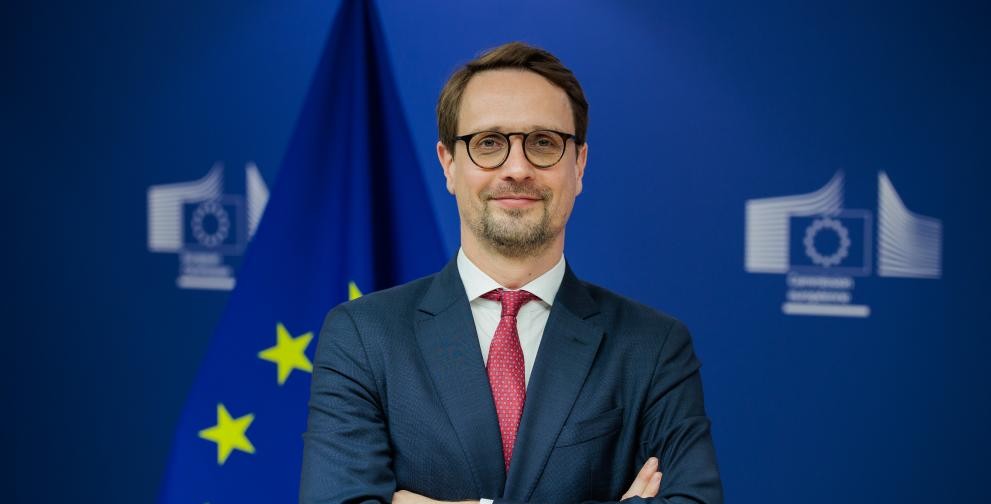
The European Union’s updated temporary protection framework for Ukrainian citizens makes no distinction between men and women, according to Markus Lammert, spokesperson for the European Commission. This clarification comes amid ongoing discussions about the status of Ukrainian refugees in Europe and the complex intersection of EU humanitarian policies with Ukraine’s domestic mobilization requirements. The announcement has significant implications for the estimated millions of Ukrainians currently residing in EU member states under various protection schemes.
The statement addresses growing concerns about whether the EU’s protection mechanisms would differentiate between male and female Ukrainian citizens, particularly given Ukraine’s martial law restrictions on military-age men leaving the country. Lammert’s confirmation that the protection applies equally to all Ukrainian citizens regardless of gender represents a continuation of the EU’s humanitarian approach to the ongoing conflict, which has displaced millions of people since Russia’s full-scale invasion began in February 2022.
Understanding the EU’s Temporary Protection Directive
The Temporary Protection Directive, first activated in March 2022, represents an unprecedented response by the European Union to a humanitarian crisis. This mechanism was originally created in 2001 following conflicts in the Balkans but had never been triggered until the Ukraine crisis. The directive provides immediate protection to displaced persons without requiring individual asylum applications, granting beneficiaries residence rights, access to employment, housing, social welfare, and medical care across all 27 EU member states.
Since its activation, the directive has provided protection to approximately four million Ukrainians across Europe. The framework has been extended multiple times, with the current protection period running through March 2026. This extension reflects both the ongoing nature of the conflict and the EU’s commitment to providing stable, long-term support for those fleeing the war. Member states have implemented the directive with varying degrees of additional support, with some countries offering enhanced integration programs, language courses, and employment assistance.
Ukraine’s Position and Stamp Recommendations
Ukrainian authorities have responded to the EU’s position by recommending that citizens ensure they have proper exit stamps in their passports when traveling abroad. This administrative guidance reflects the complex legal situation created by Ukraine’s martial law, which restricts most men aged 18 to 60 from leaving the country without special permission. The recommendation for stamps serves multiple purposes: it provides documentation of legal departure, helps maintain accurate records of citizens abroad, and potentially simplifies future return procedures.
The Ukrainian government has maintained that men who left the country before martial law was declared, or who obtained proper authorization to leave, should not face legal consequences upon return. However, the situation remains legally nuanced, with ongoing debates within Ukraine about potential amnesty programs and the treatment of those who left under various circumstances. The recommendation regarding exit stamps appears aimed at helping citizens establish clear documentation of their departure circumstances.
Broader Implications for Ukrainian Diaspora
The EU’s gender-neutral approach to temporary protection has broader implications for the Ukrainian diaspora community in Europe. With millions of Ukrainians now residing across the continent, questions of legal status, work authorization, and family reunification have become increasingly important. The protection framework allows Ukrainians to move between EU member states, work legally, and access social services, creating a degree of stability that traditional asylum processes might not provide as quickly.
However, the intersection of EU protection with Ukraine’s domestic policies creates ongoing tensions. Some European countries have begun discussions about encouraging voluntary returns or conditioning certain benefits on cooperation with Ukrainian authorities. Meanwhile, Ukrainian consulates abroad have faced controversy over policies related to document renewals for military-age men. The EU’s clear statement that protection applies equally to all genders helps clarify at least one aspect of this complex situation, though many questions remain about the long-term status of Ukrainians in Europe and their eventual relationship with their homeland.
Expert Opinion: The EU’s reaffirmation of gender-neutral protection reflects the bloc’s commitment to humanitarian principles over bilateral political pressures, though this stance may face increasing scrutiny as the conflict continues. As European countries grapple with integration challenges and Ukraine intensifies mobilization efforts, we can expect ongoing negotiations between Brussels and Kyiv that may gradually reshape the protection framework without formally abandoning its universal character.